
- Institutional
-
Our Treatments


Trust Your Teeth to the Experts
Book Appointment - Dental Technologies
- Contact

Leave your details, we'll call you on WhatsApp.
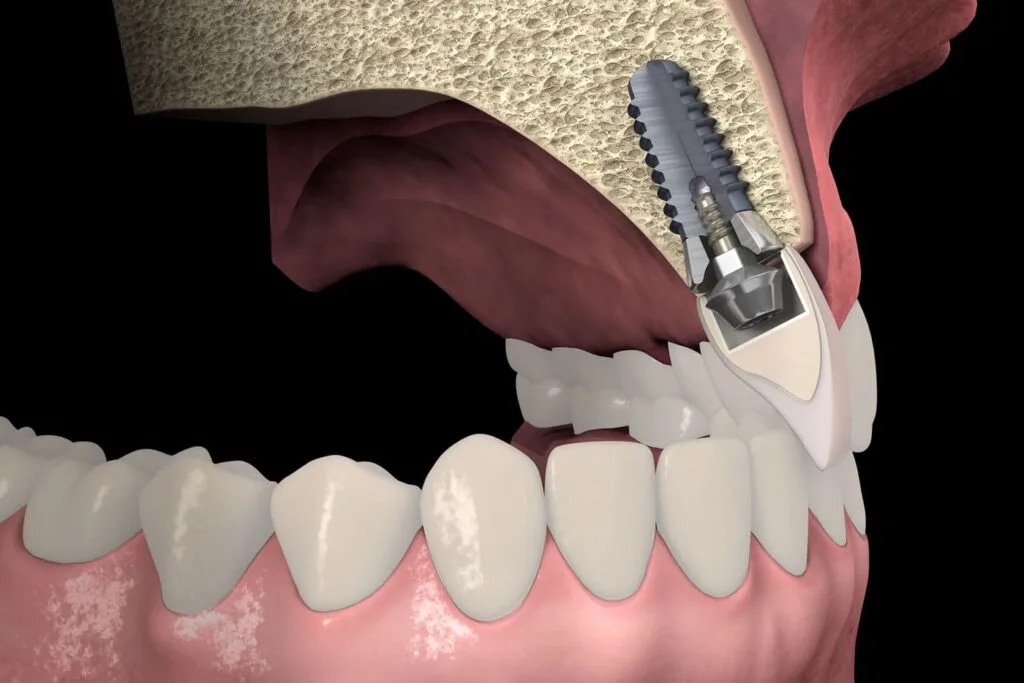
Bone Grafting: Innovative Solutions for a Healthy Jaw Structure
Bone grafting is a modern treatment method applied to reconstruct missing or weakened jaw bones. Before dental implant and prosthetic rehabilitations, it is used as an important step to increase the patients' bone volume and support aesthetic-functional results. Bone grafting techniques are divided into three main sub-categories: Block Graft, Particulate Graft and Regenerative Membrane Applications.
What is Bone Grafting?
Bone grafting is the process of increasing the volume and quality of the bone by using natural or synthetic graft materials in place of lost or weakened bone tissue. This method is necessary to provide sufficient bone support in the areas where the implants will be placed and to achieve long-lasting results.
Bone Grafting Techniques
Block Graft
Block graft is applied by placing a block-shaped graft, prepared from the patient's own bone tissue, donor bone or synthetic material, in the area of missing bone.
- Advantages: Thanks to providing a solid and wide surface, it forms a strong support for the implant.
- Areas of Use: It is preferred especially in large bone losses.
Particulate Graft
Particulate graft is a method in which small bone fragments or powdered graft materials are applied by distributing them over the area of missing bone.
- Advantages: By providing an even distribution over the surface, it encourages bone regeneration.
- Areas of Use: It gives an effective result in irregularities on the bone surface or small volume losses.
Regenerative Membrane Applications
Regenerative membrane applications are used to protect the area surrounded by the graft material from external factors and to ensure the proper regeneration of the bone cells.
- Advantages: Protection of the graft, reduction of the infection risk and support of bone regeneration are ensured.
- Areas of Use: It is preferred as a supportive treatment in both block and particulate graft applications.
Bone Grafting Treatment Process
- Examination and Planning: The areas of missing bone are determined with radiographic imaging and clinical evaluation; a custom treatment plan is prepared for the patient.
- Surgical Procedure: Under local anaesthesia, a block or particulate graft is applied according to the chosen graft technique; if necessary, it is supported with a regenerative membrane.
- Healing Process: A certain healing period (usually 3-6 months) is allowed for fusion between the graft material and the existing bone tissue.
- Follow-up and Check-ups: The success of the treatment and the graft integration are monitored with regular check-ups.
Points to Consider in Bone Grafting Treatment
- Expertise: Graft procedures must be performed by experienced dentists who are experts in their field.
- Custom Planning: A treatment plan must be created taking into account each patient's bone structure and health history.
- Hygiene and Regular Monitoring: Attention must be paid to oral hygiene after treatment, and the healing process must be supported with regular check-ups.
Dentbul Clinics

Trust Your Teeth to the Experts
Ücretsiz Muayene Al
The capital of your future is your happy smile - Dentbul
Institutional
Our treatments
Dental Technologies
Contact
Authorization
© 2026 | All rights reserved. Designed by Bkmsoft




Hello, to learn about treatment prices, see before and after images, and win a gift from Turkey's largest clinic, take the 20-second test below. 🙂
Which step would you like to proceed with?

See Prices

Ask What You Wonder
