
- Institutional
-
Our Treatments


Trust Your Teeth to the Experts
Book Appointment - Dental Technologies
- Contact

Leave your details, we'll call you on WhatsApp.
Dental Treatment in Turkey: Why Patients Choose It
Dental treatment in Turkey has become one of the most sought-after areas of health tourism over the past decade. Every year hundreds of thousands of patients travel from Germany, the United Kingdom, France, the Netherlands, the Gulf states and Russia for implants, veneers and full-mouth restoration.
There is no single reason for this. Cost is the most visible factor but not the whole explanation; the technical equipment of clinics, the case volume clinicians handle, short treatment timelines and Istanbul's accessibility all work together.
This page brings together what a patient planning treatment in Turkey actually needs to know: which treatments are performed, how the process works, what to look for when choosing a clinic, what the risks are, and what happens once you go home. Each treatment links to a dedicated page with the detail.
Where Does the Cost Difference Come From?
The question patients ask most often is: "Why is the same treatment so much cheaper? Is the quality lower?" It is a fair question and deserves an honest answer.
The price difference comes not from materials or clinical skill but from the cost structure:
- Labour and rent. Clinical staff, laboratory technicians and property costs are markedly lower than in Western Europe.
- Laboratory workflow. Zirconia and porcelain are usually produced in-house or in nearby laboratories, cutting both intermediate cost and delay.
- Case volume. High patient throughput allows equipment investment to be amortised faster.
- Exchange rate. The rate against the euro and pound widens the gap for incoming patients.
The implant brands, zirconia blocks and surgical equipment used come largely from the same international manufacturers. The difference lies not in the material itself but in the cost environment in which it is worked.
A caution, however: the price range within Turkey is very wide. Unusually low prices generally mean unknown implant brands, materials without clinical data, or items excluded from the quote. Cheapness alone is not a criterion.
Which Treatments Are Performed?
Requests from patients travelling to Turkey concentrate in a few areas.
Implant treatment
Applied across a wide range, from a single missing tooth to full-arch restoration. Comprehensive information is on our dental implant treatment page. For patients missing all their teeth, the All-on-4 / All-on-6 implant method is preferred; a detailed guide is on the All-on-4 dental implants page.
Aesthetic dentistry
For patients seeking a smile makeover, porcelain veneers, zirconia porcelain crowns and teeth whitening are the most frequently performed procedures. Digital smile design allows the result to be reviewed on screen before treatment begins.
Orthodontics
Invisalign clear aligner treatment can be monitored remotely, which makes it suitable for patients living abroad. Fixed brace treatment requires regular in-person adjustment and is generally not appropriate for patients who do not live in Turkey. Knowing this distinction in advance matters.
Prosthetics and surgery
Dental prostheses, root canal treatment and oral and maxillofacial surgery are also commonly requested.
How the Process Works
1. Remote assessment
You send a recent panoramic X-ray or CT scan along with intraoral photographs. A preliminary plan and approximate cost are drawn up from these. This is not a diagnosis — a remote assessment gives an initial idea only; the definitive plan is formed after the CT scan taken at the clinic.
2. Planning and scheduling
The scope of treatment, the number of visits required and the total timeline are clarified. Flights and accommodation are arranged around this schedule.
3. Day one: examination and imaging
An intraoral examination, panoramic X-ray and three-dimensional CT scan are performed at the clinic. The preliminary plan is updated with this data. The plan sometimes differs from the remote version; this is normal, and an honest clinic is expected to explain the difference.
4. Treatment
Surgical procedures are generally carried out in the first days and prosthetic work afterwards, with daily appointments scheduled according to the workload.
5. Check and departure
You travel home once suture checks, bite adjustment and hygiene instruction are complete. Make sure you have all your documents before leaving.
6. Second visit
Implant treatment requires a second visit for the permanent prosthesis after healing. Aesthetic veneer treatments are usually completed in a single visit.
How Long Does It Take? Timeline by Treatment
What determines duration is the type of procedure. The table below shows typical planning:
- Teeth whitening: one to two days, single visit.
- Porcelain veneers / zirconia crowns: five to seven days, single visit. Impressions, try-in and bonding fit within this period.
- Single-tooth implant: first visit three to five days (surgery), second visit five to seven days three to six months later (prosthesis).
- All-on-4 full arch: first visit five to seven days (surgery plus fixed temporary teeth), second visit five to seven days three to six months later (permanent prosthesis).
- Cases requiring bone grafting: an additional four to six months for graft healing; the overall timeline extends.
A warning: a promise that "the whole treatment finishes in a week" either ignores the healing period or presents a temporary prosthesis as the permanent one. Fusion of an implant with bone is a biological process and cannot be shortened. If you encounter such a promise, ask directly.
How to Choose a Clinic
This is the most important decision in the process. The clinic matters more than the country.
Licensing and authorisation
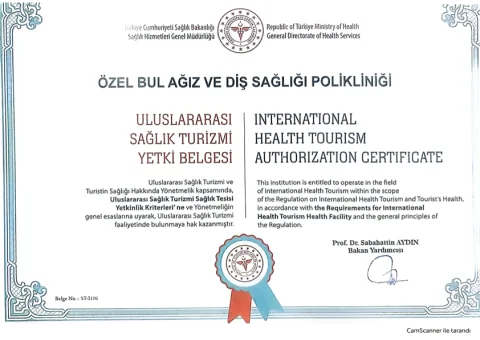
The clinic must be licensed by the Ministry of Health and hold a health tourism authorisation certificate. These documents should be produced on request.
Is imaging performed in-house?
If the three-dimensional scan is taken at the clinic, planning can be completed the same day. Where imaging is outsourced, the process lengthens and planning quality can suffer.
A written treatment plan
Which procedures are included in the price, how many visits are needed, and which materials and brands will be used must all be in writing. A verbal quote is not binding.
Transparency about materials
The implant brand, the manufacturer of the zirconia block and the warranty terms should be stated explicitly. "We use a good brand" is not an adequate answer; ask for the name.
Direct contact with the clinician
The plan should be explained to you by the clinician. If all communication runs through a coordinator and you never speak to a dentist, that is a warning sign. Information about our clinicians is on the medical staff page.
Complication policy
What happens if something goes wrong should be discussed beforehand: is remedial treatment free, who bears travel costs, how is remote support provided?
Warning Signs to Watch For
As health tourism has grown, so has the number of operations with low standards. The following are genuine warning signs:
- A definitive price and plan given without a CT scan. Remote diagnosis is not possible.
- Aggressively extensive treatment proposals. Grinding down healthy teeth for aesthetic reasons is irreversible. Crowning twenty teeth is not necessary for every patient.
- "Decide today for a discount" pressure. Medical decisions are not made against campaign deadlines.
- Refusal to name the material brand.
- Hotel and transfers foregrounded while treatment detail stays vague. Treatment marketed like a holiday package may not have been planned as treatment.
- No written warranty.
Be particularly careful about healthy teeth being ground down under the heading of "smile design". The same aesthetic result can often be achieved with less tissue removal, using porcelain veneers or orthodontics. Which option suits you is determined by examination.
Warranty and Documents
When you return home you should have the following:
- Implant passport: the brand, diameter, length and batch details of the implant used. Without this, no clinician can intervene properly if components need replacing years later.
- Pre- and post-treatment radiographs.
- An itemised invoice.
- A written warranty document. Warranty periods for the implant and for the restoration are different and frequently confused. Ask about both separately.
- A treatment summary: procedures performed, materials used, recommendations.
Clarify what the warranty covers: replacement of the implant itself, the cost of repeat surgery, or fabrication of a new prosthesis? These are separate items and not all may be included.
Aftercare Once You Are Home
Treatment does not end when you board the plane.
A dentist near you
Three to six months pass between the two visits. During that time you should have access to a clinician if a temporary prosthesis comes loose or a symptom appears. With complete documentation, a local colleague can assess the problem.
Remote support
Find out in advance through which channel and within what timeframe the clinic responds after you return. Photograph-based remote assessment is sufficient for most simple issues.
Regular check-ups
Implant patients are advised to attend every three months in the first year and every six months thereafter. These check-ups can be done in your own country; what matters is that they happen.
Practical Travel and Health Considerations
Timing your flight
Staying in the country for at least three to four days after surgery is recommended. The reason is not cabin pressure but so that swelling and sutures can be checked in person. If a sinus lift has been performed, the waiting period is longer and specific pre-flight instructions are given.
Medication
If you take anticoagulants, whether to pause them is decided by your own physician — a dental clinic cannot make that call alone. Have this conversation before you travel.
Insurance
Check whether your travel health insurance covers planned treatment; most policies cover emergencies only. Whether your domestic health insurance reimburses treatment abroad, and whether prior approval is required, should also be confirmed.
Language
Informed consent must be given in a language you are comfortable with, and the treatment plan should be written in that same language. Do not hesitate to question anything unclear — particularly what is and is not included in the price.
Travelling companion
If extensive surgery is planned, having someone with you is advisable for both practical and safety reasons.
Risks and Realistic Expectations
To be honest, treatment abroad carries specific risks, and the decision should be made knowing them:
- Difficulty of follow-up. If a complication develops you cannot reach your clinician immediately. This is the most real risk.
- Time pressure. Because the return flight is fixed, there is a tendency to compress treatment. A good clinic will propose extending the plan if needed; be prepared for that.
- Over-treatment. Intervening on more teeth than necessary cannot be undone.
- Mismatched expectations. Aesthetic outcomes are subjective; approving the digital design in advance reduces this risk.
These risks are not reasons to abandon treatment but reasons to choose the right clinic and ask the right questions. For details of the process we offer patients travelling from abroad, see our international patient page.
What Determines the Price
There is no single answer to "how much does an implant cost in Turkey?" The same treatment can be priced differently for two patients at the same clinic, because the variables differ:
- Implant brand. Systems with long-term clinical data cost more but offer continuity of components and warranty. Unknown brands are cheap; the problem appears years later when parts cannot be found.
- Restoration material. There is a clear price difference between monolithic zirconia, porcelain fused to metal and acrylic. The technical basis for this is explained on our monolithic zirconia page.
- Additional surgery. Bone grafting, sinus lifting or the number of extractions directly affect cost and often do not appear in the first quote.
- Anaesthesia. General anaesthesia requires an anaesthetist and equipment, and is a separate item.
- Number of teeth. In aesthetic treatment there is a substantial difference between eight and twenty teeth; the quote should state how many it covers.
- Temporary prosthesis. Whether same-day fixed teeth are provided is a separate line item.
When requesting a quote, ask for an itemised breakdown rather than a single figure. "All inclusive" can conceal what is not included. Ask specifically about three items: additional surgery, follow-up radiographs and possible revision.
Preparing Before You Travel
A few things done at home shorten treatment and improve its outcome.
Gum health
Active gum inflammation reduces implant success. Having scaling done by your local dentist before travelling shortens treatment and reduces days spent at the clinic.
Smoking
Stopping at least two weeks before surgery measurably lowers the risk of implant loss. The period sounds short but it makes a difference.
Chronic condition control
If you are diabetic your blood glucose should be stable; if hypertensive, your blood pressure controlled. Bring recent results with you.
Medication list
Prepare a list of everything you take, including over-the-counter drugs and herbal supplements. Some herbal products increase bleeding and your clinician needs to know.
Accommodation, Transfers and the Daily Schedule
During treatment days you may visit the clinic once or twice a day. The distance between your accommodation and the clinic is therefore not a theoretical detail but a comfort issue you will feel.
Choosing accommodation
Somewhere quiet and within walking distance of the clinic makes a noticeable difference, especially in the days after surgery. A hotel across the city means adding time in traffic to your recovery period.
Transfers
Clarify in writing who provides airport and clinic transfers and what is covered. "Transfers included" sometimes means airport pick-up only, not daily journeys to the clinic.
Schedule flexibility
Booking your return flight for a day or two after treatment ends means an extra appointment or minor adjustment will not put you under pressure. A fixed, tight schedule is the most common reason treatment gets compressed.
Recovery While Travelling
If the days after surgery will be spent in a hotel, preparing in advance improves comfort considerably.
- First 48 hours: cold compresses, resting with the head elevated, soft and lukewarm food. Hot drinks, hard food and straws are not advised.
- Alcohol and smoking: avoid throughout healing. The social side of travel can conflict with treatment here; decide in advance.
- Activity: long walks and sightseeing can increase swelling in the first days after surgery. Leave intensive sightseeing to before treatment or to the second visit.
- Medication: taking prescribed antibiotics and painkillers on schedule matters, and travel routines make this easy to neglect.
Before leaving the clinic, get written guidance on which symptoms are normal and which require urgent contact. Knowing whether swelling appearing at midnight in a hotel is expected or concerning prevents unnecessary panic.
Who Is It Suitable For — and Who Not?
Treatment abroad is not the right choice for every patient. An honest assessment:
Suitable
- Plannable treatments completable within a defined period: implants, veneers, prostheses
- Patients whose general health is stable
- Those able to make time for two visits
- Those with access to a clinician at home for follow-up
Requiring careful thought
- Treatments needing long-term regular adjustment. Fixed brace orthodontics is the clearest example.
- Serious and uncontrolled systemic disease. Treatment coordinated with the patient's own physician at home may be safer.
- Vague or very high aesthetic expectations. The expectation must be made concrete digitally before treatment.
- Very short trips. Fitting comprehensive treatment into three days means compromising quality.
A clinic willing to tell you "this is not suitable for you" is showing one of the best indicators of trustworthiness. Recommending every treatment to every patient is a commercial approach, not a clinical one.
Frequently Asked Questions
Is dental treatment in Turkey safe?
It is safe at a licensed clinic holding health tourism authorisation and working transparently. The risk comes from clinic selection, not from the country. This is why documentation, materials and a written plan should be questioned.
How many visits will I need?
Veneers and whitening are usually completed in one visit. Implant treatment requires two, with three to six months of healing between them.
Can it all be done in one trip?
Fusion of an implant with bone is biological and cannot be shortened. Teeth fitted on the day are temporary. Be wary of approaches presenting this as "finished in one go".
Why is it so much cheaper — is quality lower?
The difference comes from cost structure, not materials: labour, rent and laboratory expenses. Implant and ceramic brands are largely from the same international manufacturers. Even so, an unusually low price should be questioned.
Is the warranty valid once I am home?
It is valid if a written warranty document has been issued. What it covers and who bears travel costs should be clarified beforehand.
Can I fly immediately after treatment?
After simple procedures, yes. After surgery, waiting at least three to four days is recommended; longer if a sinus lift was performed.
Can I come for orthodontic treatment?
Clear aligner treatment is suitable because it can be monitored remotely. Fixed braces require regular in-person adjustment and are generally not suitable for patients living abroad.
Should I bring someone with me?
Advisable if extensive surgery or sedation is planned. Not necessary for simple procedures.
Can the plan change once I arrive?
It can be updated after the CT scan taken at the clinic. This is normal; what matters is that the reason is explained and the plan updated in writing.
What should I bring with me?
Any recent radiographs, a list of your medication and details of chronic conditions. If you take anticoagulants, a written opinion from your physician is helpful.
Summary
Dental treatment in Turkey offers a genuine advantage in cost and timeline when you work with the right clinic. The materials and technology used are largely to international standard; the difference lies in the cost structure.
That advantage is not automatic, however. What matters is not the country but the clinic you choose. Licensing, a written treatment plan, transparency about materials, direct contact with the clinician and a clear complication policy — do not fix a date before these five points are settled.
To obtain a preliminary assessment and written plan for your own situation, get in touch with us.
Dentbul Clinics

Trust Your Teeth to the Experts
Ücretsiz Muayene Al
The capital of your future is your happy smile - Dentbul
Institutional
Our treatments
Dental Technologies
Contact
Authorization
© 2026 | All rights reserved. Designed by Bkmsoft




Hello, to learn about treatment prices, see before and after images, and win a gift from Turkey's largest clinic, take the 20-second test below. 🙂
Which step would you like to proceed with?

See Prices

Ask What You Wonder
